Why Drone Power Systems Fail Under Real Flight Loads
High-performance UAV designs often look good on paper—until power delivery, vibration, and control precision collide in flight. Motor and servo mismatches can cause inefficient thrust utilization, unstable acceleration, thermal stress, and inconsistent response during rapid maneuvers. For FPV racing platforms, even small delays in torque rise or control loop behavior can translate into missed gates, reduced handling, and higher wear. In professional drone Kpower Technology Co. Expands UAV Motor and Servo Solutions for Drone Power Motors and FPV Racing Drone Motors power motor applications, limitations in power density and mechanical integration can force compromises in weight, packaging, and reliability. Add integration complexity—different KV ratings, voltage requirements, and dimensional constraints—and procurement teams face a familiar problem: sourcing components that are truly compatible with the vehicle’s propulsion and motion-control architecture, not just individually functional parts.
How Kpower Expands Motors and Servos to Solve Compatibility Gaps
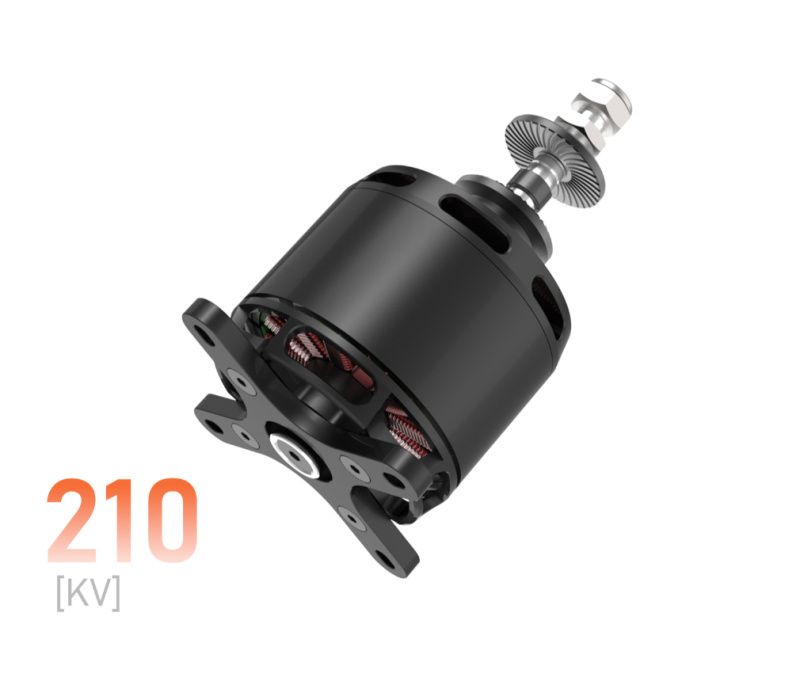
Kpower Technology Co. expands its UAV motor and servo solution ecosystem to address these integration pain points at the component and system level. The expanded portfolio supports drone power motors, professional FPV racing drone motors, and integrated aerial drive systems for unmanned aerial platforms with demanding performance requirements. The key problem-solution focus is practical: engineers need motors and servos that fit compact structures while delivering stable output under dynamic loads. Kpower emphasizes high power density designs, ultra-compact packaging, and propulsion efficiency that helps reduce weight penalties and improves responsiveness. On the motor side, brushless electromagnetic design, precise mechanical manufacturing, and drive tuning help deliver consistent power delivery and stronger instantaneous acceleration—critical for high-speed, competitive flying regimes.
Precision Servo Control for Stable Motion, Payload, and Mechanisms
Beyond propulsion, many UAV issues originate in motion-control subsystems where accuracy, durability, and communication compatibility matter. Kpower’s expanded servo lineup is designed to support auxiliary precision control across intelligent aerial mechanisms, including gimbals, camera stabilization modules, precision payload execution structures, steering adjustment assemblies, and aerial robotic accessories. The servo matrix includes brushless servos, coreless servos, digital servos, micro servos, waterproof servos, and high-torque industrial servos—covering different torque, size, and accuracy needs. To reduce integration friction, multi-protocol control options support PWM, UART-TTL, RS-485, and CAN-bus, enabling smoother matching with flight controllers and subsystem architectures. This approach helps teams upgrade multi-functional drone capabilities with better motion repeatability and more predictable behavior across mission profiles.
Conclusion
When UAV performance bottlenecks emerge, the root causes are often component compatibility, control precision, and system integration constraints—not just raw motor power. By expanding its specialized motor and servo offerings and pairing them with scenario-aware engineering support, Kpower enables more reliable propulsion output and more stable motion control for both racing and professional aerial use cases. For engineering teams looking to streamline part selection and reduce integration risk, kpower.com provides a practical path toward matched motor-drive and servo-control solutions that support compact designs, faster dynamics, and improved efficiency across drone power systems and FPV racing builds.
