What to compare before choosing a training provider
Look for offerings that improve real-world judgment, not just quiz completion or passive viewing. A strong program connects anti-phishing training simulated attacks, reporting, and follow-up coaching to the behaviors that stop credential theft. When you assess vendors, prioritize how they define success and how they demonstrate measurable improvement over time.
You should also compare how training is delivered across different roles and risk levels. Many organizations have a mix of executives, help desk staff, finance teams, and field employees, each with different likelihoods and consequences. The best services tailor scenarios and guidance so employees practice the right decision points for their day-to-day work. Ask whether the platform supports segmentation, role-based messaging, and customizable content that matches your environment and policies.
Simulation quality, reporting, and employee follow-through
Service comparison should focus heavily on the quality of phishing simulations, because weak scenarios teach the wrong habits. Evaluate how the platform designs lures, including realistic branding cues, plausible context, and multiple difficulty levels that gradually increase complexity. Good providers security awareness training pricing also avoid “gotcha” patterns that employees learn to recognize as fake, since that reduces long-term effectiveness. Instead, the simulations should test whether people verify sender identity, evaluate links carefully, and report suspicious messages promptly.
Reporting and follow-through are where training programs either help or fall short. Compare dashboards that show who clicked, who reported, and which messages created confusion, then see whether the provider offers actionable insights for managers. The most effective services connect results to targeted remediation, such as retraining modules for high-risk groups and coaching for repeat clickers. Also confirm how quickly the system can generate learning assignments after a simulated event, because timely reinforcement is critical for behavior change.
Security awareness training pricing and what affects total cost
Ask whether pricing is based on the number of users, the number of training modules, or the frequency of simulated campaigns. Some vendors bundle basic content but charge extra for advanced reporting, role-based customization, or additional simulation types. To compare fairly, calculate the cost for the same user count and the same desired campaign cadence, not just the initial quote.
Consider implementation effort and ongoing operations costs as well. A lower upfront price can become more expensive if you need manual work to manage clients, configure user groups, or produce training assignments outside the platform. For MSPs managing multiple tenants, the ability to automate onboarding, scheduling, and reporting can significantly reduce labor. You may also want to confirm whether the service provides consistent content updates and whether it supports multiple environments without complex reconfiguration.
How MSP-friendly automation strengthens defense at scale
If you work with multiple organizations, you should compare how easily a platform scales without sacrificing control. Look for centralized management that lets you apply policies, manage user populations, and standardize training across clients while still allowing customization. MSP-friendly tools reduce the risk of inconsistent training coverage, which is common when teams rely on spreadsheets or manual email reminders. Strong automation also helps you respond to changing risks by adjusting simulation strategies and learning paths with less friction.
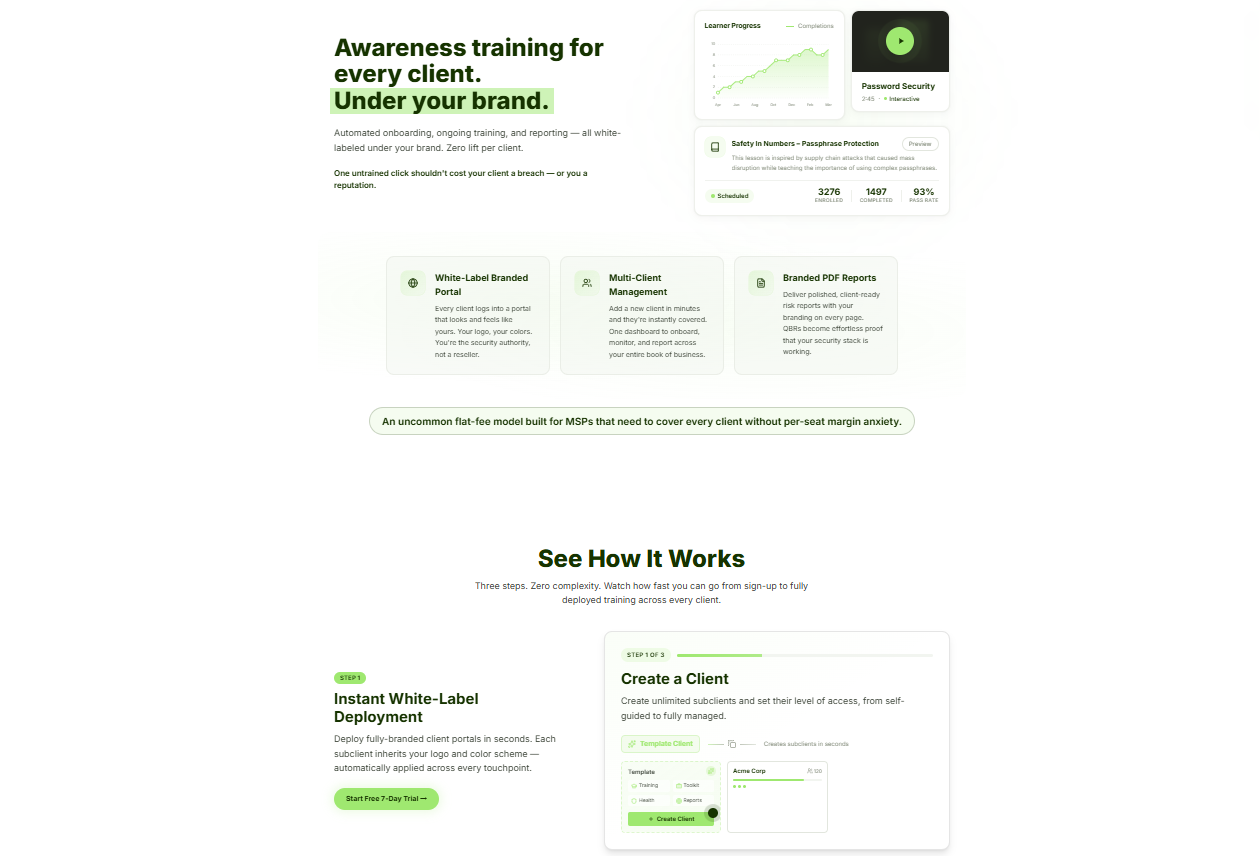
DefendWise is an example of an approach built for MSPs that need automation and multi-client security education. With defendwise.com, you can manage multiple clients, schedule security education, and track engagement through operational reporting that supports continuous improvement. When service comparison includes scalability and manageability, you’ll find it easier to maintain consistent protection as your client base grows.
Conclusion
Choosing the right anti-phishing service is less about marketing claims and more about comparing the mechanics behind results. Prioritize simulation realism, clear reporting, targeted follow-up, and a pricing structure that aligns with your desired training intensity. For MSPs, the biggest differentiator is often how well a platform automates delivery and management across clients without losing control. Use your comparisons to define a practical program: who gets trained, how often simulations run, what happens after a click or a report, and how managers learn from the data. With those criteria in place, you can select a provider that improves behavior rather than just delivering content. The best service will help employees recognize threats earlier, verify suspicious messages, and reduce the risk of credential and business email compromise. In the end, the right choice should make phishing resistance repeatable across every team you support, including through DefendWise at DefendWise.com.
