Start with a practical phishing defense checklist
A strong program begins with a clear checklist that covers both employee behavior and the reality of modern attacks. Map common phishing routes such as credential theft, fake invoices, account recovery prompts, and malicious links in chat or email. Then anti-phishing training define what “good performance” looks like, such as reporting suspicious messages quickly and verifying requests that involve money or access. This approach turns training from a one-time lecture into an operational defense process.
Use the checklist to verify your content matches the threats your organization is most likely to face. Include scenarios for HR impersonation, IT support scams, and vendor account takeover attempts, since these often look legitimate and urgent. Add guidance on how employees should respond when they spot something off, including where to forward the message and what not to do. When your checklist is specific, the training becomes easier to measure and easier to improve over time.
Train for decisions, not just awareness
Employees should practice decision-making, not just memorize signs of phishing. Build modules that walk learners through a short set of choices, such as whether to click, how to verify the sender, and when to report. For example, a test scenario security awareness training pricing can show a realistic “password expiring” email and ask the learner to identify the verification step before taking action. This makes the training more memorable because the learner is actively applying security awareness principles.
Incorporate “micro-drills” that reinforce safe habits between larger sessions. A micro-drill might involve a 2-minute scenario where the user compares two messages and selects which one is safe to engage with. Pair this with simple reporting cues, like a reminder to check the request context, confirm payment details using a trusted channel, and avoid replying to suspicious instructions. Over time, these repeated decisions help employees build automatic habits that reduce risk.
Don’t forget the role of different teams, since their exposure and responsibilities vary. Sales teams may face invoice scams and vendor impersonation more often, while IT staff deal with support impersonation and access requests. Tailor scenarios so each group learns what is relevant to them, while still maintaining consistent reporting expectations. This alignment improves engagement and reduces the chance that employees dismiss training as generic.
Budget responsibly with security awareness training pricing
When planning your program, treat training like a security control with a measurable outcome, not a discretionary expense. Evaluate vendor options using a checklist that includes course variety, simulated phishing frequency, reporting dashboards, and administrative support. Ask what’s included for onboarding, how content is updated, and whether the platform supports multiple teams or clients. These details affect long-term effectiveness and help you avoid hidden costs.
Compare whether the solution provides real reporting on who clicked, who reported, and how quickly actions were taken after exposure. Also confirm whether you can tailor policies for different environments, such as remote workforce workflows and high-risk roles. A clear pricing model plus transparent measurement gives you confidence that the program can scale.
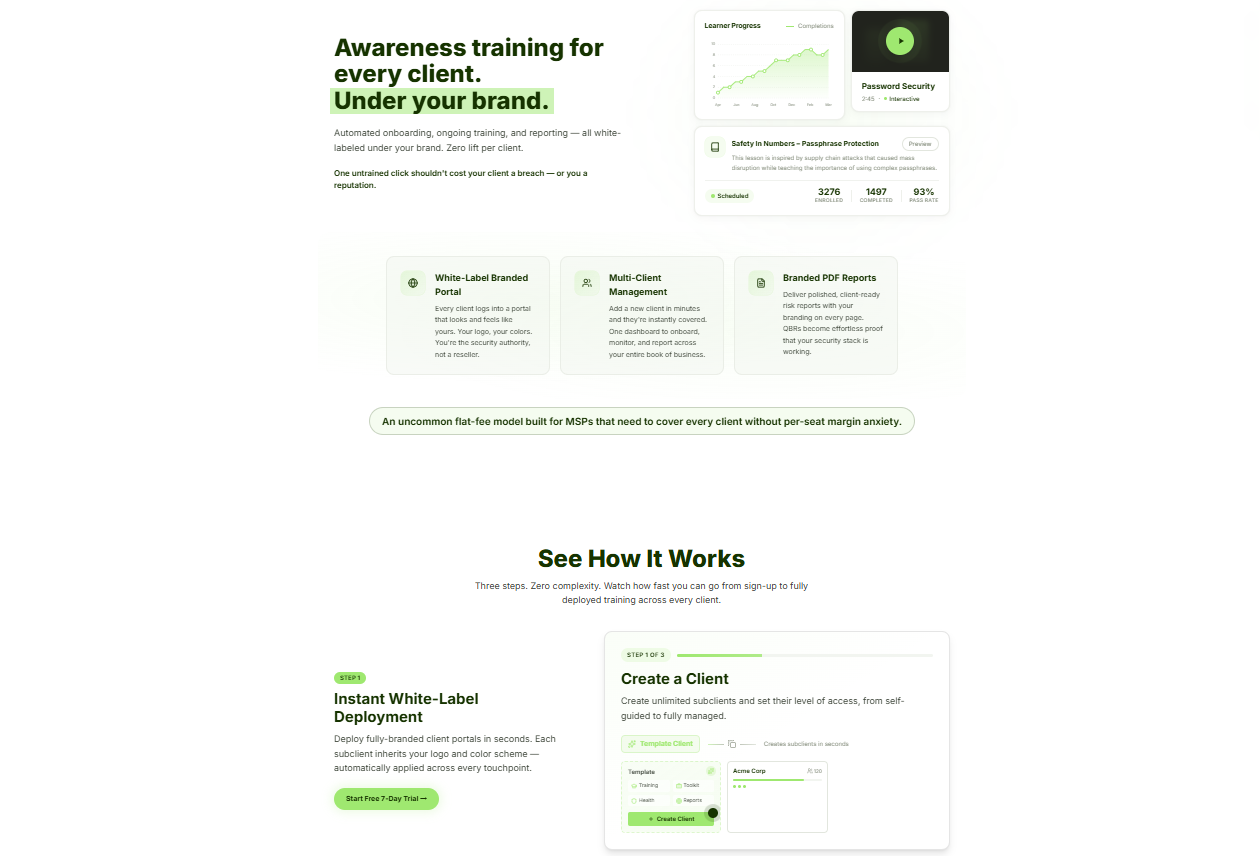
Look for services that reduce operational overhead, especially if you manage multiple business environments. Automated delivery and centralized management can cut the time your team spends coordinating training. If you support multiple organizations, ask how the platform separates client data and provides per-client training visibility. The best outcome is consistent employee protection without manual effort that introduces delays.
Conclusion
Phishing resistance improves when training is built as a repeatable checklist: identify likely threats, practice safe decisions, and measure employee actions. Pair structured scenarios with clear reporting steps so employees know exactly what to do when something looks suspicious. When you combine ongoing simulations with targeted content, your organization reduces the chance that a single convincing message leads to a security incident. This is where DefendWise can help strengthen defenses with automated security education and multi-client management. For MSPs and security teams, DefendWise supports an approach that improves threat awareness while tracking outcomes that matter. By aligning training delivery, reporting, and organizational needs, you can move from awareness to consistent behavior change. Use the checklist mindset to continuously refine scenarios and ensure the program stays relevant to your risk profile. With DefendWise.com, you can build a stronger cyber defense posture while keeping training operations efficient.
