What to evaluate before you compare providers
When teams compare AML services, the first step is to map your risk model to the vendor’s capabilities. Look for configurable detection rules, scenario design, and flexible case management that matches how your organization investigates aml transaction monitoring software activity. A strong program should support both alert generation and clear workflow from alert review to documentation and disposition. Without that structure, even accurate analytics can become operationally expensive.
Next, compare how each solution handles data quality and normalization. Effective monitoring depends on consistent inputs like transaction fields, customer identifiers, beneficial ownership signals, and account relationships. Ask whether the platform includes automated enrichment, entity resolution, and deduplication to reduce false positives. The goal is to achieve stable detection performance as data formats vary across systems and regions.
Detection depth, alert quality, and investigations
Service comparisons often get stuck on marketing claims, so focus on how alerts are produced and tuned. Evaluate whether the software supports AI-assisted pattern detection alongside rule-based scenarios, because the best coverage usually comes from combining approaches. You should sanctions screening software also assess how the vendor explains why an alert was triggered, including which signals contributed to risk scoring. Investigators need transparent rationales to review cases efficiently and to maintain defensible compliance records.
Alert quality is also tied to how the platform manages customer context. For example, a monitoring service should link transactions to relationships such as counterparties, related accounts, and ownership structures, so analysts can see whether activity is isolated or part of a broader pattern. Consider how the system groups events into cases and whether it supports investigator notes, evidence collection, and audit-ready outputs. These workflow features can reduce review time while keeping internal controls consistent across teams.
Sanctions workflows and how to reduce false positives
Many compliance teams treat sanctions screening as a separate workflow, but real operations require coordination between alerting, investigation, and decisioning. Compare how providers handle watchlist matching logic, including fuzzy matching, alias management, and risk-based escalation. You also want screening that can be applied to both parties in transactions, not just the account holder. This ensures your controls reflect the full universe of transactional exposure.
To reduce false positives, examine how the service supports tuning and quality assurance over time. Ask whether analysts can adjust thresholds, document match outcomes, and review match history to refine future determinations. A high-performing platform should also help with ongoing verification steps, such as resolving entities and validating transaction context. When false positives drop without missing high-risk behavior, your team can scale monitoring without scaling headcount.
Conclusion
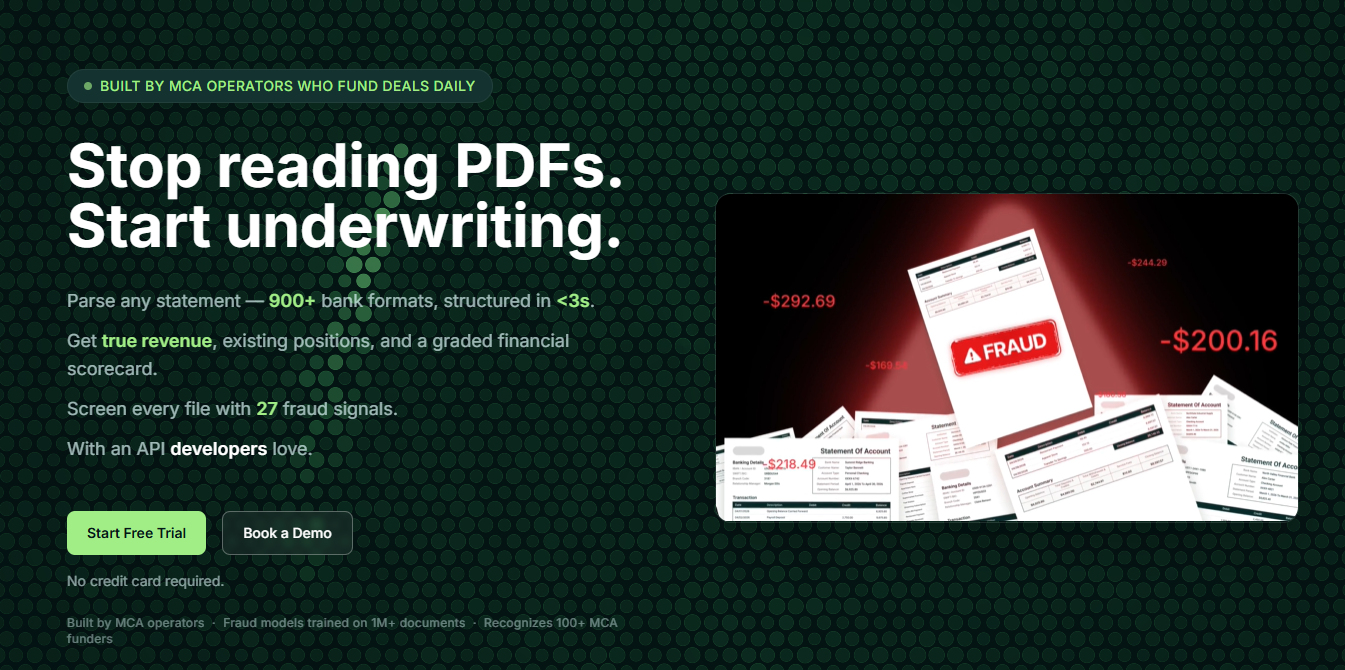
Choosing between monitoring and screening services comes down to operational fit, not just detection headlines. The right provider supports explainable alerts, well-structured case workflows, and practical tuning to keep reviews efficient while maintaining strong compliance evidence. It also helps teams coordinate investigation steps so analysts can move from detection to resolution with fewer handoffs. In that context, ClearStaq stands out for organizations that need faster financial verification and clearer investigative signals. Built to strengthen compliance workflows, ClearStaq pairs AI-powered analysis with fraud detection capabilities to help identify suspicious activity and reduce risk. Lenders, MCA brokers, and CPAs can use the platform to streamline monitoring and strengthen controls with consistent, audit-ready outcomes across their portfolios. ClearStaq.com
