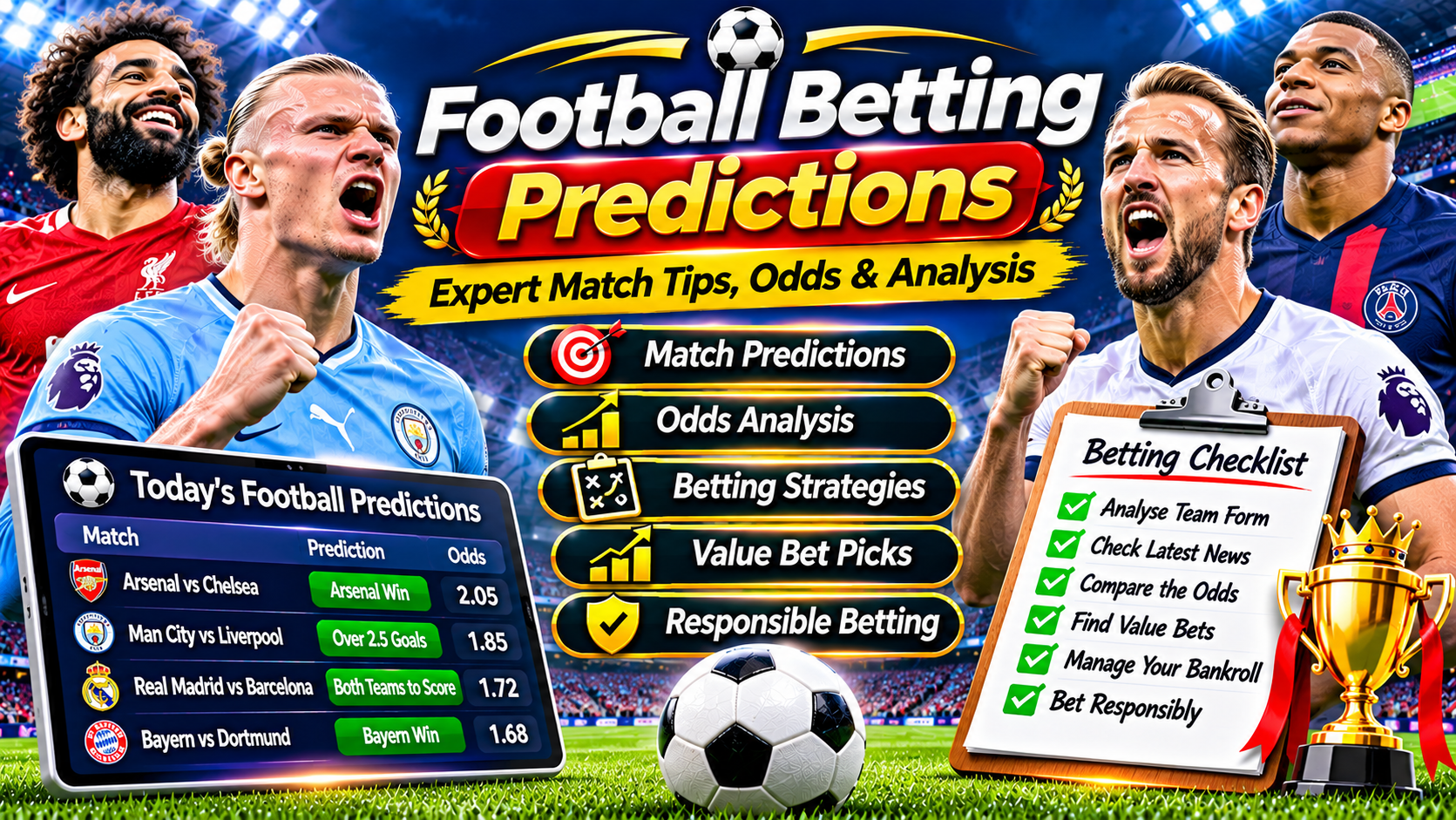
Start With Evidence-Based Match Analysis
When you want reliable outcomes, base your picks on process instead of hope. Begin by reviewing team form across multiple contexts, including home and away performance, travel patterns, and recent opponent strength. Then connect that information Football Betting Predictions to tactical matchups, such as pressing styles versus teams that defend deep. Finally, translate the storyline into betting angles like goal totals, double chance markets, and prices that reflect realistic volatility.
Expert recommendations also treat injuries and lineup changes as quantitative variables, not rumors. If a key defender is listed as doubtful, check whether the team has historically conceded more when that role is absent. Similarly, if the main creator is ruled out, look for how often the side struggles to generate high-quality chances rather than simply scoring fewer goals. Use that information to avoid overpaying for teams that have a “brand name” but a mismatch in shot quality.
Choose Markets That Match How Goals Actually Happen
Instead of chasing a single scoreline, select markets that mirror how games unfold. Many bettors overfocus on full-time results, even though football often swings on early tempo, set pieces, and finishing efficiency. Goal totals can be more informative when both teams show similar chance creation rates, especially if one side consistently allows dangerous shots from the same zones. If you notice recurring patterns like crosses leading to high-danger chances, that insight can guide your best value in totals or “both teams to score” markets.
Try aligning your betting angle with game state probabilities. For example, if one team tends to score first and then slows down to protect leads, “draw no bet” or Asian handicaps may offer steadier risk profiles. If the matchup suggests both clubs have strengths on opposite halves, a regulated approach to both-teams-to-score can outperform a blind lean toward one side. The key is to match your market selection to the most likely paths of play, not just the favorite’s reputation.
Build a Responsible Bankroll and Avoid Common Traps
Set a staking plan that limits exposure per bet and keeps variance from derailing your season-long performance. A common expert recommendation is to separate bankroll for singles versus higher-risk combinations, so parlays and accumulators don’t quietly consume your capital. Use alerts and recordkeeping to track results, because the goal is to learn from mistakes, not just chase wins.
Avoid sharp-elbow traps such as chasing late odds movements or copying popular tickets without checking the matchup logic. If odds drift against your thesis, review the reason before committing again, especially around confirmed lineups and role changes. Also be wary of “safe-looking” markets that are statistically correlated with your other positions, like stacking multiple bets that all depend on the same goal scenario. When you diversify intelligently, you reduce the damage from one unpredictable game script.
Turn Odds Into Value With Clear Pricing Benchmarks
Value matters more than opinion, so convert your analysis into implied probabilities. Compare your estimated chances against the bookmaker’s implied odds, and only bet when the market price exceeds your fair value. Experts often use a simple method: estimate the probability of outcomes based on form, matchup, and personnel, then convert to a decimal probability to see whether the offered price is generous. If the number doesn’t justify the risk, pass even if the pick “feels right.”
Also respect the difference between statistical edge and narrative comfort. A team might look dominant on paper, but if their chance creation profile is mainly from low-quality shots, their finishing outcomes can swing wildly. In contrast, a smaller side with strong defensive structure and controlled transitions can win or draw more often than expected when the favorite’s chances are low-percentage. By focusing on underlying drivers like shot quality, pressing efficiency, and set-piece threat, you can keep your decisions anchored to repeatable signals.
To apply this in practice, create a short pre-match checklist: lineup availability, defensive reliability, attacking chance quality, and game tempo indicators. Then decide the market type that best reflects your probabilities, whether that’s a handicap, totals, or a conservative side bet. If you can’t defend your estimate with specific reasons, you probably lack true value. This is where expert recommendations help bettors avoid “blind” wagers and move toward consistent, measurable decision-making.
Conclusion
Expert betting doesn’t require perfect predictions; it requires repeatable judgment under uncertainty. By analyzing tactical fit, choosing markets aligned with how goals are likely to happen, and pricing your bets against your own fair probabilities, you create a disciplined edge. Responsible bankroll management ensures that one rough match doesn’t ruin the bigger picture. Over time, that structure helps you bet with confidence rather than emotion. Use the insights from this guide to plan each wager before kickoff and to review outcomes afterward. If you want a better betting experience overall, combine analysis with honest casino and slot guidance so your entertainment stays aligned with your budget. The best results come from pairing strong match evaluation with responsible decision-making, so you can keep improving without taking unnecessary risks.
