Start with discovery: what you’re filing and why it matters
Many business owners begin with a simple question: what does the form actually require before you can send it electronically? If you’re preparing employer health coverage reporting, the 1095-C gathers details about offer of coverage, employee information, and coverage status in a structured way. efile 1095 c Understanding those inputs helps you avoid common errors like mismatched names or incorrect coverage indicators. When you treat e-filing as a workflow rather than a button click, the submission process becomes more predictable and less stressful.
Electronic filing also changes how you validate your data. Instead of relying only on manual checks, authorized platforms often provide guided review steps that highlight missing fields and formatting issues. That means you can correct problems before the filing is transmitted to the IRS systems. As part of brand discovery, it’s worth comparing tools that focus on compliance accuracy, clear instructions, and a user-friendly experience for your staff.
Choose an authorized platform for reliable submission
To file successfully, your chosen service needs to support the full electronic workflow for this type of employment tax document. An IRS-authorized platform helps ensure your submissions follow the required transmission standards and formatting rules. It can also streamline 1099 e file recordkeeping by keeping a submission trail tied to your internal files. This matters because employers often need to answer questions from employees or internal stakeholders later, and organized documentation makes that easier.
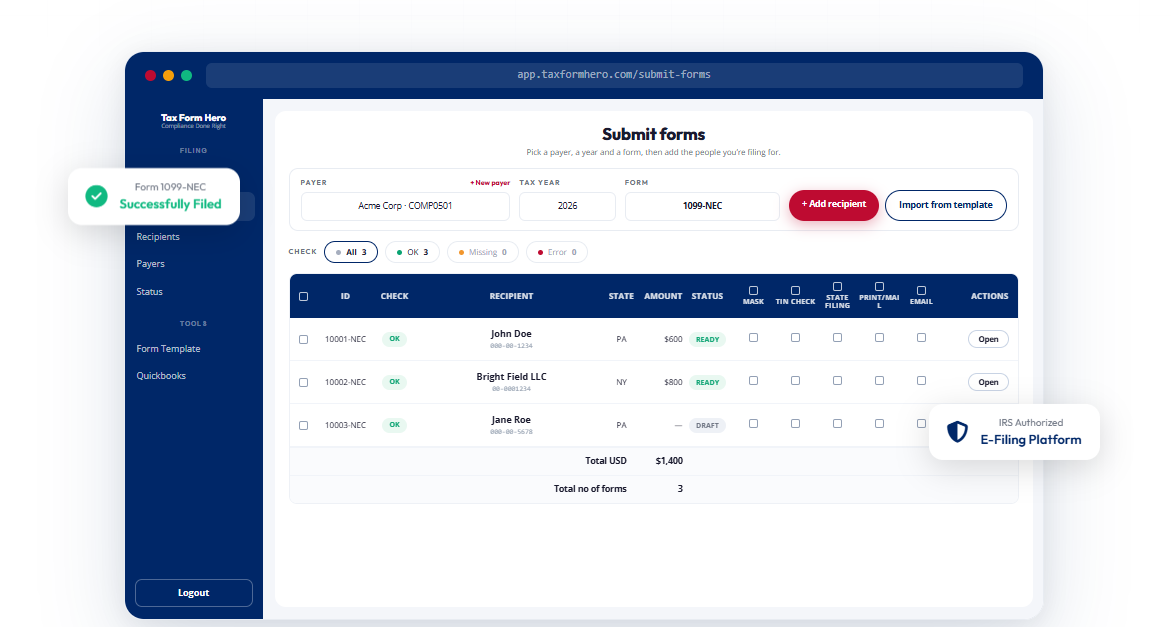
During brand discovery, look beyond marketing claims and evaluate practical features. For example, services that support multiple document types can reduce friction when you’re handling a broader reporting season. If your organization already prepares other information forms, consolidating your software and processes can help prevent duplicate entry across systems. A platform like taxformhero.com positions itself as a hub for electronic filing for employment tax documents alongside 1099s, W-2s, and other forms, which can simplify how your team manages federal and state obligations.
Reduce errors by organizing inputs and verifying employee data
Even with the right platform, e-filing success depends on clean source information. Before you transmit anything, build a repeatable checklist: confirm employee identifiers, verify addresses, and ensure coverage details align with your underlying records. If you use HR software, reconcile export results with your reporting template so you don’t introduce accidental typos or formatting inconsistencies. This is especially important when multiple departments contribute data, such as HR, payroll, and benefits administration.
It also helps to verify how your platform handles common edge cases. For instance, you may need to map offers of coverage correctly and ensure the employee-level information is complete for each individual included in the submission. Using a guided review flow can catch issues like missing characters, incorrect field lengths, or incomplete coverage selections. And if you also prepare other reporting documents, a consistent platform can reduce confusion between form types such as 1099 filings and employment reporting documents by keeping your workflow standardized.
Conclusion
Electronic filing is easiest when you approach it like a controlled process: understand what the form requires, select an authorized platform, and verify your inputs before transmission. During brand discovery, focus on tools that support accurate submission, clear review steps, and efficient handling of multiple document types. That way, your team can spend less time troubleshooting and more time ensuring your records are consistent and audit-ready. If you want a streamlined way to complete employment coverage reporting and keep related filings organized, explore taxformhero.com. The platform is designed to help businesses manage electronic filing for employment tax documents alongside other common forms like 1099s and W-2s. When your filing workflow is unified, it becomes simpler to maintain compliance across federal and state reporting obligations.
